BY JESSICA FURSETH
Look around and you might see them — bright yellow and sparkling pink noise-filtering earbuds are all over workplaces, restaurants, and subway cars. Earplugs are the new cool accessory, with Loop even coming on board as an official sponsor to Coachella. It seems like everyone has realized that actually, it’s pretty nice to be able to filter the din of life.
There’s a welcome side effect to this trend: It’s made life a lot easier for those of us with auditory sensitivities. With fashionable earplugs at our fingertips, restaurants that used to be too loud to bear may now be tolerable for a few hours, or even enjoyable. In offices full of exhausting chatter, we can now conserve energy by wearing ear protection without it being a big deal.
There’s a welcome side effect to this trend: It’s made life a lot easier for those of us with auditory sensitivities.
Everyone’s at it, and that matters — while some neurodivergent people embrace nonconformity, many of us resent being othered for simply trying to make our environments more bearable. “A lot of people don’t want to be seen as different, and they don’t want to be judged for what they might need,” says Dr Keren MacLennan, a researcher with the Centre for Applied Autism Research at the University of Bath in the UK.
It turns out, sound sensitivity is extremely common: 20-40% of people self-report being noise sensitive. Among us neurodivergents, the rates are higher. According to MacLennan, up to 94% of autistic people have some form of sensory processing difference, and a lot of people with ADHD also struggle with loud environments. But not everyone who’s sensitive to sound is neurodivergent — those of us who suffer from migraines, nerve damage, tinnitus, anxiety, depression, and PTSD may also have reason to shy away from noise.
MacLennan’s work focuses on how environments can adapt to be more accommodating, such as improving acoustics and offering quiet spaces. But that’s not always possible. “And it’s not always the case that people want to get away from sound. There’s a lot of complexities with people’s sensory experiences,” says MacLennan — some of us may want a reduction in noise, while others prefer replacing the racket with a more predictable or enjoyable sound, such as music. This is where tools like headphones, ear defenders, and earplugs can be useful for making spaces more tolerable, or even pleasant.
20-40% of people self-report being noise sensitive.
Yet for too long, social stigma has often meant the sound-sensitive among us went without the ear protection we needed — and were left to suffer the consequences of sensory overstimulation. For example, even though studies show that 28% of office workers are disturbed by noise, it wasn’t long ago that wearing earplugs or headphones in the office was considered antisocial at best, or proof of distraction at worst.
“I once got a written warning at work for wearing earphones,” says Hayley Brackley, a neurodiversity specialist who runs Great Minds Don’t in Northamptonshire, UK. “I was working in an open-plan office and I found the chatter really distracting.” This took place back in 2007. Although Brackley had informed her employer she had an ADHD diagnosis, “no one really understood what that meant back then. I explained that the earphones helped me do my work better, but it just wasn’t accepted. I ended up leaving that job largely because of this.”
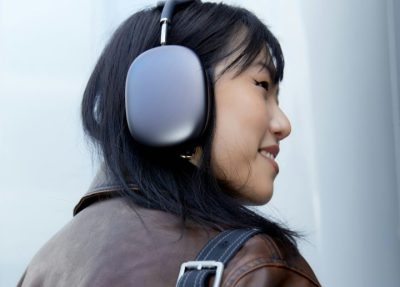
Thankfully, this stigma has shifted in recent years, as lots of noise-filtering earbuds have come on the market, from brands such as Loop, Alpine, Eargasm, Hears, and Vibes. Discreet wireless noise-canceling earbuds like Apple AirPods have also become commonplace and can be used either to play music or just as a tool to quieten the din. While MacLennan thinks we still have a long way to go, the proliferation of colorful options has done a lot to address the taboo around wearing ear protection.
Now Brackley feels free to wear earplugs whenever she needs them and finds them helpful to block out excess noise or to get some reprieve from overwhelm: “I can honestly say nobody has seemed to judge me for this in the past 5 years.”
We could be facing a future where people wear earplugs for the same reason we wear sunglasses: it’s simply nice to have some control over our sensory input. For the sound-sensitive among us, all of this means it’s easier than ever to be comfortable without needing to justify or explain.
“I’ve used [filtering earplugs] for the past 2 years,” says Laura Linklater, who runs The Motivated Learner, an education consultancy in Yorkshire, UK. “Whenever we go to a kids’ party and it starts to get loud, there will be at least one [parent]mom who will go, ‘I’ve got my Loops!’”
While Linklater has ADHD, several of her friends identify as neurotypical — yet the desire to turn down the squeals of soft play is one they all share. “We’ll shake our little round boxes with glee and put [our earbuds] in. It’s not weird anymore, and it’s great.”
BIO: Jessica Furseth is a journalist living in London, writing about urbanism, wellbeing, belonging, and the culture of technology. Follow her work on Instagramand Substack.