BY MELISSA MALDONADO-SALCEDO
When I first encountered Oliver Sacks’ essay An Anthropologist on Mars in graduate school, I thought I understood the metaphor. Sacks, the renowned neurologist and writer, described autism as living in a world that doesn’t match your brain — a place where you observe words and cues as if studying a foreign culture.
I thought he was describing me. Still, I attributed that feeling to being Latina, a first-generation college student, living with multiple sclerosis — anything but autism.
I’ve been an anthropologist for over a decade, teaching medical ethics at NYU and conducting research across the hemisphere. For years, I masked traits that made me seem awkward or “eccentric,” convinced my wiring was a liability. Today, I see the opposite: my neurodivergent traits — hyperfocus, sensory sensitivity, and pattern-seeking — aren’t obstacles. They are the very qualities that make me a distinctive anthropologist and artist, enabling me to notice what others overlook and transform fragments into meaning. I once called my approach to anthropology “punk rock” because it felt rebellious. In truth, it was autistic all along.
My neurodivergent traits — hyperfocus, sensory sensitivity, and pattern-seeking — aren’t obstacles. They are the very qualities that make me a distinctive anthropologist and artist.
As a child, I chased dinosaurs through library aisles, dreaming in the dust of Indiana Jones — unaware these fascinations were seeds. My sustained focus, special interests, and sensory attunement, traits later dismissed as “quirks,” were already shaping how I engaged with the world and fueling my love for vast timelines, deep history, and lost worlds.
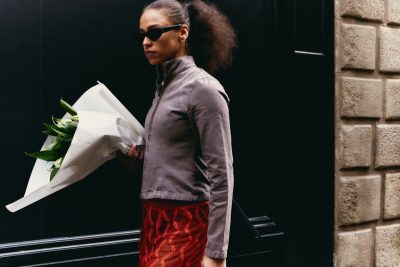
Graduate school became a masterclass in masking. I drowned in sensory overwhelm while performing normalcy in an ableist culture that seeped into the classroom. To professionalize my outsider status, I relied on noise-cancelling headphones to mute chatter that felt like static and sunglasses to shield me from the harsh fluorescent lights in crowded hallways. They might have looked fashionable, but these were survival tools—not accessories—small defenses against a world that constantly overwhelmed my nervous system. Burnout shattered that illusion.
I didn’t have a midlife crisis in my forties — I received a gift: an autism diagnosis that reframed everything. After years of alphabet-soup labels, the picture finally made sense. My traits had been pronounced since childhood, and the gap between my grades and behavior finally had context. I saw how traditional schooling — with its emphasis on conformity and performance—harms health and identity, especially for neurodivergent kids and families navigating systemic pressures.
I now see how attributes once dismissed as cracks in the foundation have become the scaffolding of my work. Hyperfixations and quiet obsessions are not detours but deep wells — reservoirs that sustain ethnographic inquiry long after the surface has dried and others have moved on. My embodied sensitivities act as tuning forks, vibrating to tonal shifts, spatial hierarchies, and environmental whispers — details others overlook but I alchemize into ethnographic gold.
What clinicians call “special interests,” I recognize as altars of devotion: sustained engagements that transform fragments into meaning, excavate the architecture beneath behaviors, and turn experience into story. Anthropology and art reward the slow gaze, the lingering touch—and it is there, in that aperture, that neurodivergence shines.
What clinicians call “special interests,” I recognize as altars of devotion.
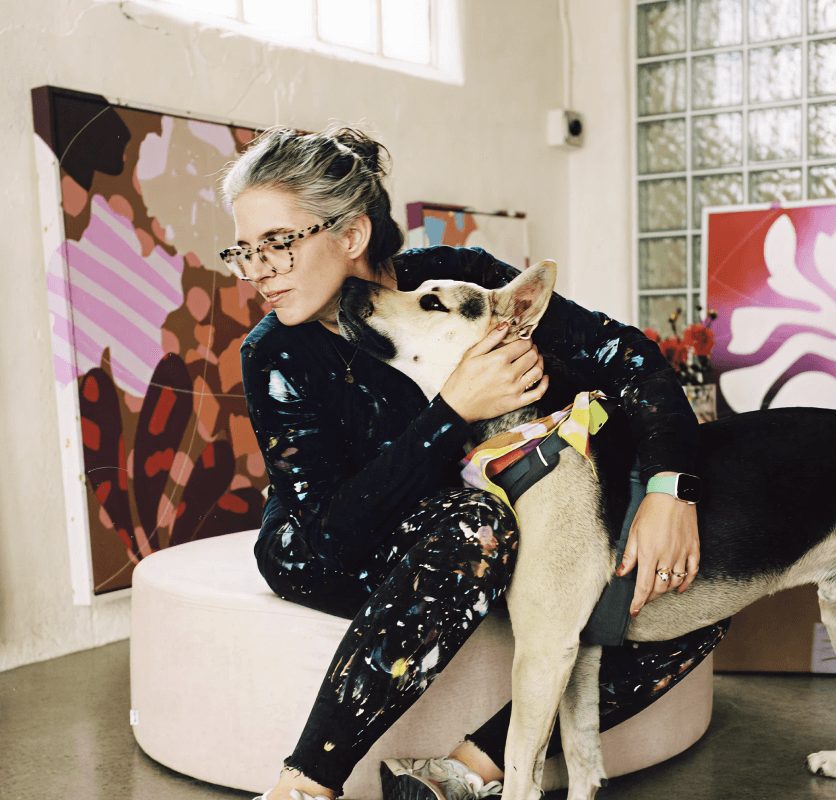
This lens also shapes my work as an abstract artist. My layered compositions and vivid juxtapositions evoke sensory intensity rather than literal representation, giving my words texture and my ideas form. In both domains, I center multiple ways of seeing and challenge assumptions about bodies, brains, and belonging — unapologetically exploring what it means to be autistic, an artist, and an anthropologist.
Autism shapes the questions I ask, the patterns I trace, and the care I bring to my work. It is not incidental to anthropology or art — it’s integral to my life. Where Sacks framed the alien metaphor to understand autism from the outside, my narrative turns it inward. I’m not a subject of observation; I’m the observer and the creator, using neurodivergent perception as a lens of inquiry and craft, transforming lived experience into insight.
Autism isn’t a barrier — it’s my vantage point and my muse. And that’s what Oliver Sacks helped me see: the anthropologist on Mars isn’t just a metaphor. It’s me — living, working, and creating in a world that feels foreign, yet endlessly fascinating.
BIO: I’m an artist and anthropologist who uses neurodivergence as both a lens and method. Since 2013, I’ve taught at NYU Tandon and live in Brooklyn with my husband, our son, and two dogs—who remind me daily that curiosity is a survival skill.