From the therapeutic nature of performance for neurodivergent actors to the importance of self-agency and representation for all, the universal resonance of Rent’s themes of disenfranchisement is a personal one for EPIC Players.
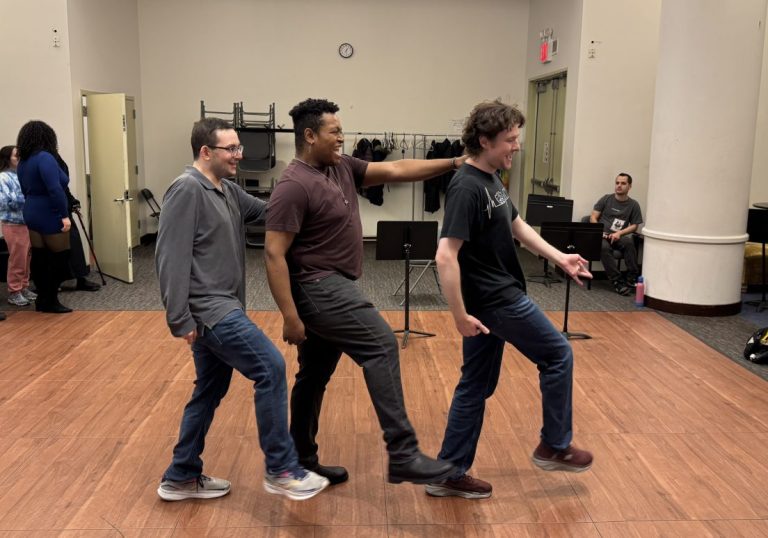
The NYC-based non-profit theatre company that aims to shine a light on neurodiverse talent. In an industry that has long upheld standard practices and rigid hierarchies, EPIC prioritizes collective access, intuitive blocking, and emotional check-ins. And unlike so many well-meaning organizations outsourcing talent for the sake of “inclusivity,” EPIC doesn’t infantilize their community. And through performing Rent, it shows — neurodivergent and disabled individuals performing as sexual beings with power and self agency.
The groundbreaking 1996 rock musical tells the story of a group of struggling young artists, musicians, and filmmakers in New York’s Lower East Side in the early 1990s, set against the backdrop of the AIDS pandemic, poverty, and gentrification.
Motley Bloom spoke with members of EPIC Players ahead of its opening June 4.
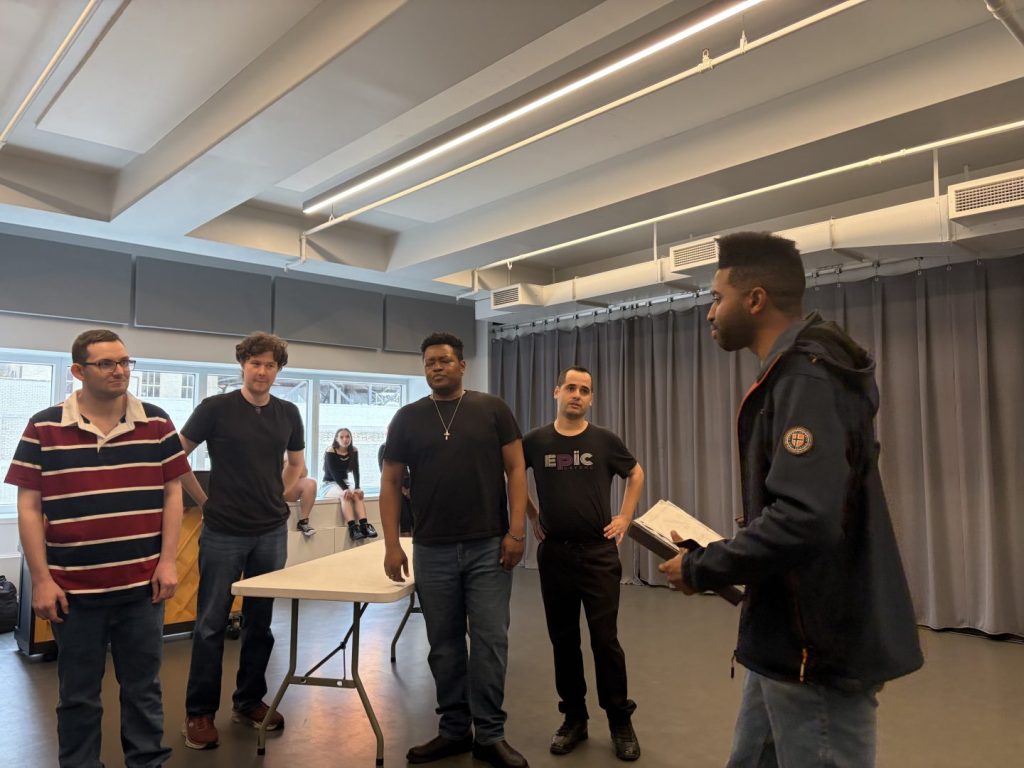
Cassidy Kaye, the assistant director, Joshua Cartagena, who plays Angel, and Cameron Walker, playing Collins, told us the story of how EPIC is working to dismantle theatrical hierarchies and toxic norms in the spirit of creating an accessible environment for theatre, and what exactly that means for Rent.
How do you each personally identify neurologically?
Cameron Walker: I identify with being neurodivergent, but I have nothing on paper. So while I relate to the experience, on paper, I’m neurotypical.
Joshua Cartagena: I have Tourette’s syndrome, a tic disorder, OCD, and ADHD.
Cassidy Kaye: I’m newly coming into the title of neurodiverse as a person with anxiety and ADHD, and kind of navigating the space of: Am I taking that label away from others by using it, you know?
What does it mean to you to be telling this story — one of marginalized communities — as a cast and crew of lived experience with neurodiversity?
Joshua Cartagena: If we’re opening these doors to neurodivergence, which simply includes everyone as a cast, then anybody can do it. Whether it’s just being disabled or anything, anybody can put their mind where they put their mind to. And you can just lift others up by saying, ‘Hey, I may have to rest, but that doesn’t stop me from doing what I want to do,’ and just creating this moment for everyone.
Cameron Walker: I think for neurodiverse and disabled groups, [representation] still feels a little bit behind. So I think this is a wonderful opportunity to still encapsulate that wonderful representation Rent is known for, but adding another layer of it by having a mostly neurodivergent and disabled cast. And yes, showing that neurodivergent and disabled people can be put in positions of power and self-agency, and being sexual beings, and just experiencing every bit of life that everybody else can.
There’s a weird problem with infantilizing disabled communities, and I think this production is really going to turn that on its head and really show these groups as being just as amazing and powerful as any other group you can think of.
There’s a weird problem with infantilizing disabled communities, and I think this production is really going to turn that on its head.
– Cameron Walker
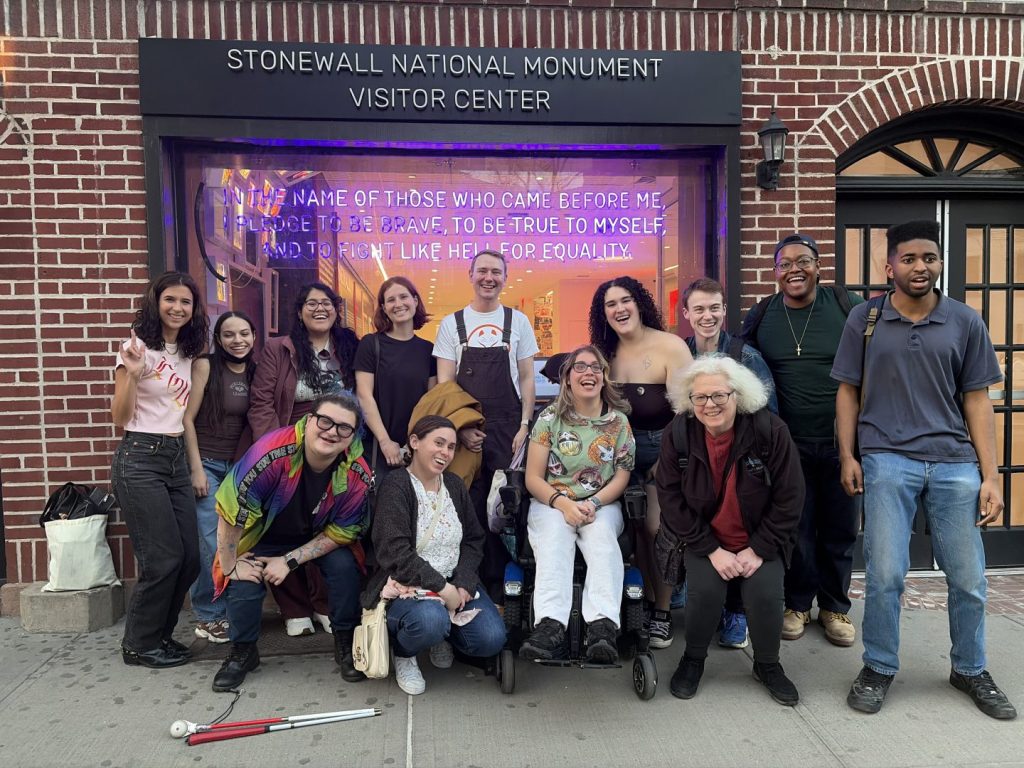
Cassidy Kaye: I think of it from two different lenses. I’ve been obsessed with Rent since I was a little kid, so I feel very honored to be on this production. And what drew me to this show when seeing it and listening to it for the first time was like, ‘Oh, I want to be a part of that.’ I want to be a part of those artists. I want to be a part of that community. I want to be a part of what they’re building together. And I felt like that the first time I saw a show at EPIC Players. I was like, ‘Oh, I want to be a part of that’ — this neuro-inclusive community that is leading the way to show power and agency, and power social change through the arts.
I also think Rent is a show that sheds the light on systemic disenfranchisement, and I think neurodiverse communities and disabled communities experience that enough to know that truth, and can relate to that truth — the ways in which societal norms or policies or obstructions have prevented them from being able to form community in certain situations. I think there’s a lot of connective ties in community and in being a disenfranchised community similar to gay folks in the late 1980s while fighting for this activism and fighting to be seen and heard and treated like the people they are, like everybody else. And I think neurodiverse communities and disabled communities know that same fight very well.
Why do you think theatre might attract neurodivergent people?
Cameron Walker: As a basis, theatre is just all about imagination and enacting the impossible, and you can truly just be anything you want to be. [Neurodivergent and disabled people] are kind of limited to what society thinks they’re capable of. And I think through the power of theatre, you can really explore anything you’re capable of. It’s such a challenging art form, and it really calls on you to utilize so many skill sets to put on a successful production. And I think EPIC Players has really given everybody the opportunity to rise to the occasion and show off what they’re capable of in a space where they otherwise would feel like they’re not.
Joshua Cartagena: I feel like EPIC opened a lot of doors. It’s amazing. It feels like a faith song to me. It’s like you can express your voice through singing, or acting-wise and dancing-wise, however you want to put it into. I do teaching assisting aside, but being part of Rent means a lot to me. I feel like it showcases different varieties.
Cassidy Kaye: Kind of the arc of the theatre person is just a little zany and eccentric and creative, which I also see as good things and identify them in myself as well. And I think that attracts a certain kind of magic.
What are your theatrical backgrounds and how did you get involved in EPIC Players?
Cameron Walker: I got into theatre in college, so I feel like a late bloomer. Actually Rent was one of the first pieces of theatre that I was shown, and I was like, this is amazing. And I remember my freshman year, we watched it every weekend. We were obsessed with it, and I essentially was forced to do theatre in college. I went to school for music, and we had a production of A Christmas Carol, and I was like, Okay, I guess I’m doing this. And I fell in love with it and have been obsessed with it ever since. I joined EPIC in around 2022 as a part of Putnam County Spelling Bee, and I’ve been along for the ride ever since.
Joshua Cartagena: Same here. I was recommended and I will never forget, I’ve never been through college because of my learning disability, so being a part of EPIC, in 2021/2022 when I came around, it felt safer. I feel like I can be myself, and I don’t have to be this person that has to hide behind walls or behind a disability. The good thing about EPIC, amazingly, is that they do a lot of accommodations, and if you need help with certain things, just email us, talk to us. We’re here to help. And that’s what I love about this theatre company, because I never graduated from college. I was going to go, but then I had to drop out because of my disability. I felt less-than. But being in EPIC helped me grow out of that fear and seeing that you really can put your mind where you put your mind to something.
Cassidy Kaye: It makes it easy that Josh has such a beautiful voice and is such a gifted actor. He’s not giving himself enough credit. He’s being modest.
My dad is first-generation and was a theatre major who knew he would have to be a lawyer. And so from a very young age, he started taking me to shows. I always say that theatre is my first love, but my access to it came from the privilege of having someone be able to take me from a young age. And it’s why I care so much about arts access, because this thing that changed my life for the better, and charges me, and gives me purpose came to be because I had access to it. So I really believe in accessible arts for everybody. But I studied theatre education at the University of Texas, and then I moved to New York to get my master’s in educational theatre for communities and found EPIC along the way, starting out as their intern in 2020. And now I’m full-time with them as their executive programs assistant.
How does your Tourette’s show up for you on stage?
Joshua Cartagena: Don’t get me wrong — I do get in my anxiety moments, but it’s natural and normal. But for my Tourette’s especially, I learn to cope with this stuff that I try to do. And when I sing, it doesn’t happen. That’s what I’ve noticed about myself — when I’m performing, it feels like I’m distracted and more focused in the music.
Are there moments in the show that might feel personal or resonant for you as your character?
Cameron Walker: Collins has been an amazing representation for black actors and black queer actors. So the intersectionality has just been amazing. It’s basically a dream role for most people that are like me. I feel like I’m just a layer of myself when playing Collins. But also for me, Relating the most, I myself am HIV+, and beginning to play a character that also deals with AIDS has been so cathartic. It hasn’t hit me, specifically in an emotional way, but it’s just felt like a comfort where you’re playing a character amongst other characters who are all dealing with similar things. And it almost feels a little comforting, being with somebody who’s dealing with the same things as you. And that’s just another layer of why I enjoy doing ‘Rent’ so much.
Opening night is June 4th 2026, and the show will run until June 14th, 2026 at EPIC Players, the neuro-inclusive theatre company. Get tickets here.