- Traditional fitness culture can trigger avoidance for us. Reframing movement as something that regulates, interests, or brings joy changes everything.
- Understanding our sensory preferences around sight, sound, rhythm, and smell is the key to designing a movement experience we’ll actually want to come back to.
- Whether it’s the immersive distraction of martial arts, the ritual of a candlelit home workout, or dancing to your own beat, the best exercise is the one that feels like anything but.
Numerous studies point to the benefits of exercise on both our physical and mental health, from maintaining cardiovascular health to managing anxiety and ADHD symptoms.
And for some of us, exercise is the thing that powers our lives; it’s our special interest, something that takes priority because we love it so much.
But for a lot of us, being told we need to exercise triggers our pathological demand avoidance (PDA); the mere thought of “having to” do it is enough to make us want to do anything but. And when exercise starts to feel like a prescription to “fix” us, we feel the urge to avoid it even more.
Moreover, the industrialized fitness complex has turned moving our bodies — something that was natural and enjoyable to us growing up — into a performance-driven, ego driven experience focused on losing weight and how we look to others. The Peloton leaderboards, the loud clanging weight rooms, the over the top workout classes — they aren’t working for us.
So what if, instead of approaching exercise as a prescription for losing weight or getting fit, we exercised simply for the experience of it? What if instead we could exercise because it’s regulating, captures our interest, or feels like joy?
What if, instead of approaching exercise as a prescription for losing weight or getting fit, we exercised simply for the experience of it?
We can start by reframing exercise as movement. How can we move our bodies in a way that feels good? Then, we need to lean into our wiring, look at our traits, and find the right motivation that works for us. Rhythm, dopamine dressing, music, visual stimulation, and even smell all play a part in if you like the activity or not.
Based on your own traits, interests, and motivations, you can design an exercise that works best for you. And here at Motley Bloom, we’re here to help you figure that out.
Let’s re-design fitness, to fit us.
Create A Sensory Experience
Understanding your own sensory preferences is key to finding a movement experience that works for you.
For our managing editor Brianna Schubert, that looks like leaning into the immersive experience of yoga classes. “When I went to a studio that burned incense before class in a room full of plants and big windows, I felt so much more alive and excited to practice yoga,” she says. “Then when I switched to yoga classes at a gym, it felt a lot more sterile and I stopped going.” The experience at the first studio was part of the exercise — the sight, smell, rhythm of the movement made her keep going back because it resonated with her on a deeper level.
Sight
If you’re sight sensitive, going to a gym with lots of bright lights and visual stimulation is likely not going to be an enjoyable experience. On the other hand, if you crave visual stimulation, designing where you work out based on your vizzy stimminess can be the exact motivation you need.
Here are some ideas for designing exercise around sight:
- Workout at home in soft, ambient lighting. Find inspiration in Meredith Witte’s videos!
- Go for a hike, walk, or run in the woods or by the water with a vista point or view being the end goal. Maybe it’s up to a mountain peak or a favorite meadow.
- Try a slow flow yoga class — they often have dimmed lighting!
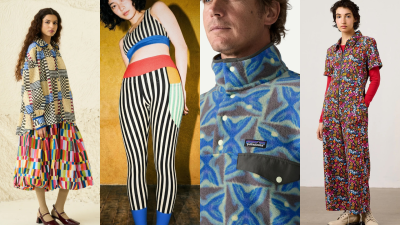
- Wear clothes that bring you joy; A favorite color or pattern. Re-think your workout gear, it doesn’t have to be boring. We love how Deb Voison runs in beautiful skirts, dresses and beads. Was athleisure ever really fun?
Sound
Sound-sensitive folks might find the gym or workout classes overwhelming; the music, the clanging of weights, the instructor telling you what to do, it’s a lot, all at once. But sound can also be a great motivator, a hype-up, and a rhythm to keep us going.
Here are some ideas for designing exercise around sound:
- Make a playlist of your favorite songs that inspire you to move every time you hear them.
- Play the same song over and over to get into a rhythm.
- Attend a theater-dance class that pairs showtunes with dancing.
- Schedule a time to walk and chat with a friend.
- Wear earplugs to a workout class to soften the loudness. It can also help avoid unwanted conversations.

Rhythm
The rhythm of exercise doesn’t have to be straining. How can you make it feel regulating and empowering? What movements feel good? What ways of moving your body make you feel alive?
Here are some ideas for designing exercise around rhythm:
- Running or hiking at the same pace can be a symphony of feet hitting the ground of a trail, or track. You can make your own music track as you go.
- Try repetitive fluid movements like yoga, pilates, or ballet. The repetition and flow can tap into pattern recognition spikes.
- Consider hyper intensive sports like rowing, swimming, and marathon or long-distance running, which use more muscles and body parts than other activities and push you farther than you ever thought you can go.
- Dance. Let go of perfection and embrace your inner child and joy like in Angela Trimbur’s Balletcore. A themed based dance class where adults are encouraged adopt personas and explore their creativity in a supportive, theatrical environment.
Smell
Smell has been shown to be linked to motivation, and for us neurodivergents, we might experience smell at an even deeper level. Of course, gyms often smell terrible and sweat isn’t exactly motivating, but what if you could instead find ways to bring smell into your workout as a positive experience?
Here are some ideas for designing exercise around smell:
- Light a specific candle every time you workout at home.
- Spray your favorite perfume or wear a deodorant smell you love when you workout.
- Take your movement outside to nature and enjoy the scents of nature and fresh air, trees, or the ocean.
Suspend Reality
Creating a positive sensory experience is the best way to keep coming back to movement in our lives. But beyond the physical, we can also lean into our wiring toward distraction and passion to encourage us to come back and back again.
Is there a physical activity that lets you get lost in it? What kinds of exercise help you focus not on how hard you’re working but instead on the joy or the outcome of the experience?
Boxing, fencing, or JuiJitsu can have you sparring to “survive.” For some of us the joy of leaning into alternate universes and suspending reality makes us move our bodies without even realizing that it’s exercise.
Motley Bloom co-founder Kane Dijkman can’t stand the mundanity of spin classes. Where’s the adventure? Where’s the fun? “A spin class is my idea of hell since there is nothing to distract me from how painful and unpleasant it is and someone shouting generic motivational encouragement ends up annoying me,” he says. “What works well for me is sparring in martial arts classes. Having to be present in the moment so I don’t get kicked in the face works really well to keep my mind off how winded I am.”
Maybe you feel like a king going off to battle while fencing, a warrior princess practicing archery, or a faerie in a sword yoga class. Our imaginations are powerful, and we can combine our movement with other special interests to suspend reality and escape — a win-win for our mental and physical health.

Do It Your Way
At the end of the day, the best way to design your exercise for you, is to lean into an experiential feeling that makes you excited to come back to it. Don’t analyze calorie burn or steps on a device. Throw the conventional ways of exercise out the door. Reflect on the following questions to guide your exercise re-design:
- What are your sensory traits? (Take our quiz here to find out yours!)
- How can you blend your favorite movement and sensory traits to create an enjoyable experience?