
Strong
A trait that scores in the strong range, has a significant influence on your experiences and behavior. Its artifact appears in its fullest, most intricate form, with many layers, due to the complexity of its expression.


What is Trait Mapping?
Your traits, in context
Moving Beyond the Label
A new way to understand your wiring, with or without a diagnosis
Ever wonder why two people can share a diagnosis and still be so different? Why no two solutions ever look quite alike, and why the ways we move through the world and thrive are ours alone? That’s where traits come in.
A trait is a specific way you take in and respond to the world, like how you react to background noise or bright light. Labels name a category. Traits show up in the everyday details of how you live.
Diagnostic Labels
Getting diagnosed can be life-saving for some, and answer long-held questions for others.
A diagnosis can:
Traits
A trait is neither positive nor negative. It lives in a neutral state. It’s how a trait interacts with the environment around you that determines whether its effect is positive or negative. Understanding your traits picks up where a diagnosis leaves off, or where curiosity begins.
Traits can:
Environments
The spaces you move through can either work with your wiring or against it. Trait mapping connects the two. Once you know your traits, you can anticipate how an environment is likely to activate them and how best to navigate through it.
The right environment can:
Artifacts
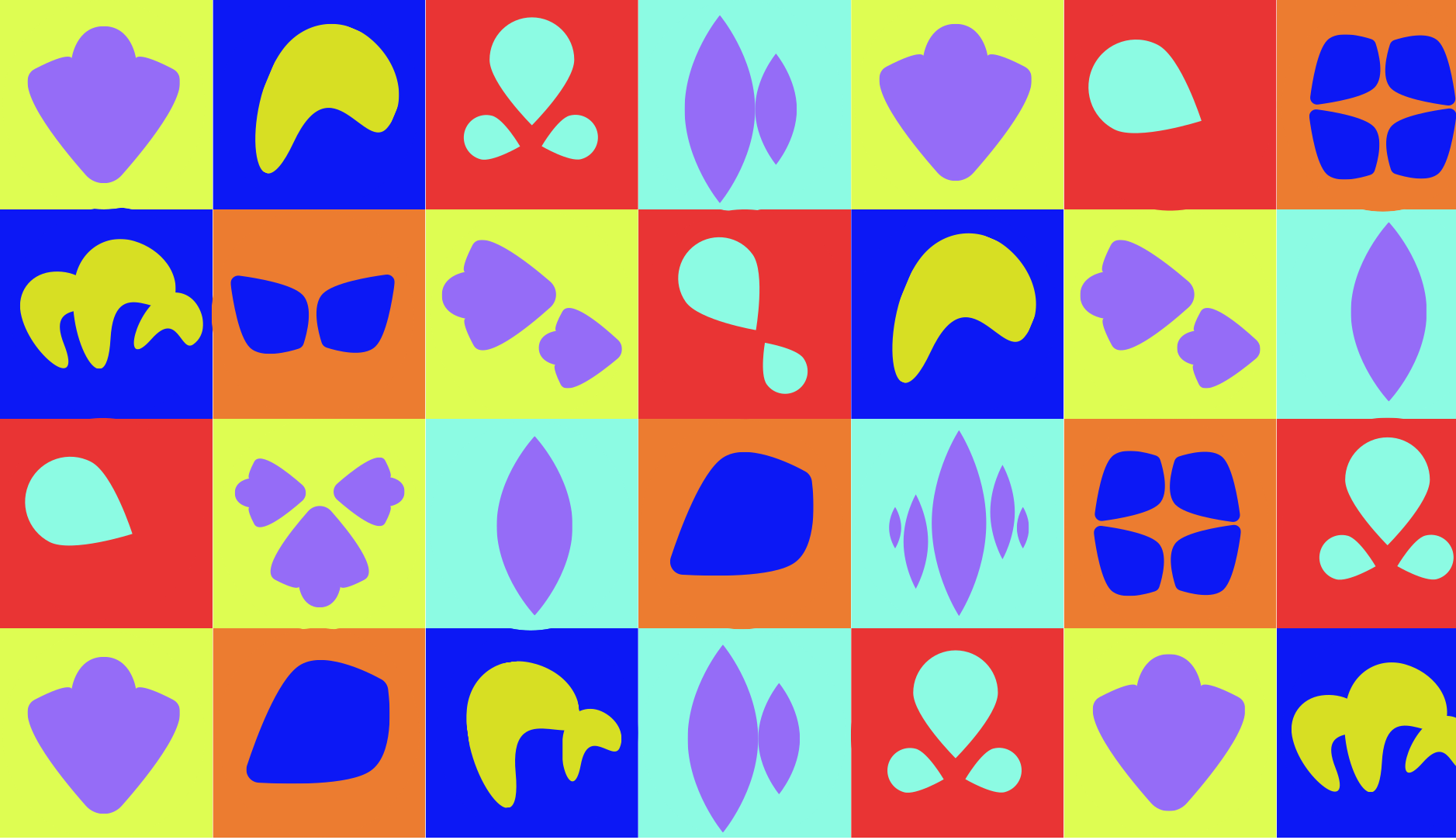
For many of us, thinking and communicating don’t always happen in straight lines or spoken words. We may not always get our words out in a way others understand, but some of us understand and express ideas best through color, shape, and pattern. So that’s how we map traits.
Each of the 32 traits has its own artifact, and each artifact reflects how strongly that trait influences you. It starts with your five senses: sound, sight, touch, taste, and smell. A sense that stays in the background appears as a simple, essential form. The more a sense shapes your experience, the more intricate its artifact becomes, gaining layers, edges, and detail. No level is better than another. Together, your five artifacts form a portrait of how you notice, feel, and remember.

Insights for Daily Living

IYKYK: There are some things you can’t leave the house with. And it varies from person to person. Here’s what our team keeps in our bags….
Read More…

As someone with ADHD, I’ve spent years trying to quiet my busy mind. Cold plunges in the lake help….

When you’re neurodivergent, designing a wardrobe you love isn’t just about style….

These are some of our favorite colorful and pattern-ful clothing brands for building a wardrobe that’s ideal for vizzy stimming every day….